About Floorplate
The floor was never the whole building
My name is Meg Corrigan, and for the first eighteen months this notebook had exactly one reader: me. I'm a heritage-architecture researcher based on the Gold Coast, and Floorplate holds the material that never made it into a state survey report or a visitor pamphlet — licence dates, the names of the people who signed a building off, the plan drawing before anyone hung a sign over the door.
Before the notebook
Six years of surveys, and a drawer that kept growing
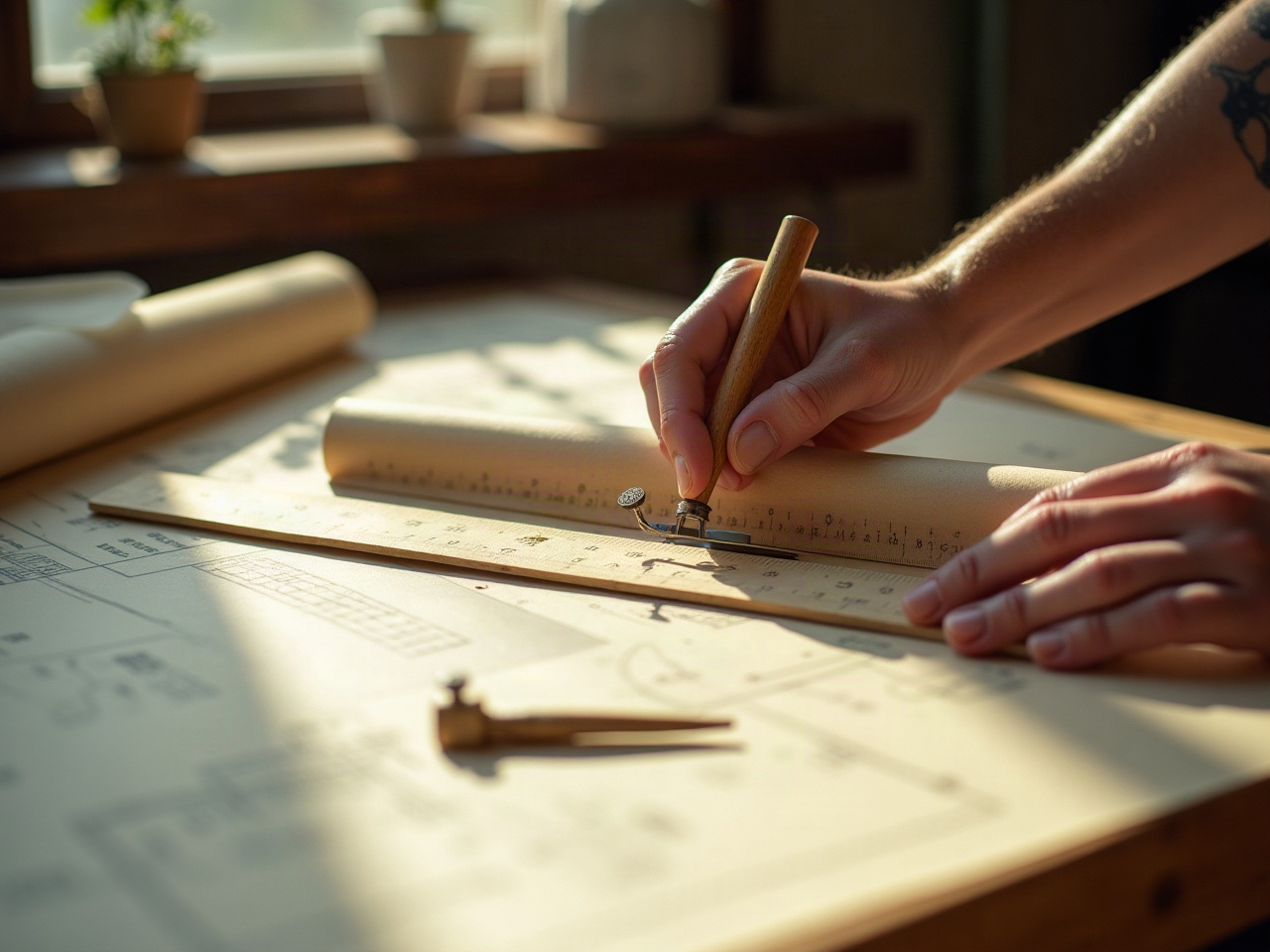
I spent six years on contract to state heritage bodies, walking through motels, roadhouses and hotel towers built through the 1960s and 70s, photographing joinery nobody had catalogued since the builder handed over the keys. Most of what I saw was one room among many — ordinary, functional, never meant to be looked at twice. That work usually ends as a paragraph in a heritage register nobody outside a planning department will open. What's left over — the aside a surveyor writes in the margin because it doesn't fit the form — filled a drawer I kept moving from desk to desk. Floorplate is that drawer, typed up.
Family memory
A tower going up on the other side of the peninsula
I grew up a few streets back from Sandy Bay in Hobart, close enough that the tower at the end of the point was just part of the skyline I did my homework under. My grandmother remembered it going up in 1973, and she talked about it the way people talk about a road being sealed rather than a landmark being built. That's a family memory, not an architectural one — the building's own details belong on another page of this notebook.
It went up the way anything goes up when you're used to nothing changing — slowly, then all at once, and then it was just there.
Scope
What ends up in the notebook — and what doesn't
- KEEP
A building
Its structure, its architect where one is on record, and the year it opened.
- KEEP
A licence
When and where one was granted — Lasseters' 1981 opening in Alice Springs still surprises people: a licensed casino in a desert town of a few thousand.
- KEEP
A redevelopment
A temporary building giving way to a permanent one — Sydney's harbourside casino traded from a temporary site in 1995, the permanent building two years later.
- SKIP
An offer, a review, a recommendation
Floorplate doesn't rate a room, rank a table or tell you where to go tonight — that's a different kind of writing, and not mine.
Since going public
From a personal file to a public site
The drawer stayed private for years because I assumed nobody else would want a paragraph about a joinery detail or the week a licence was granted. A few people did — other researchers, a couple of retired hotel staff, one architect's daughter looking for her father's name on a drawing. That was reason enough to put it online, unedited in tone if not in typo. If you know a building I've missed, or you were there when one of these places opened, I'd like to hear about it.